Calculus 1 (MTH 231 D005 [28438]) Fall 2025
Instruction Mode: In Person
Tuesday, Thursday 4:40 p.m. – 6:20 p.m. 1S 102
Dr. Andras Balogh
1S 223 and through Zoom at (click here to get the Zoom link)
Tuesday, Thursday: 9:00 a.m. – 10:00 a.m. and 3:00 p.m. – 4:30 p.m., or by appointment. Feel free to email me if you’d like to discuss course related topics outside of office hours. There is absolutely no reason not to contact me for help.
Rogawski, Adams & Franzosa, Calculus: Early Transcendentals, 4th Edition. W. H. Freeman & Co. (2019). ISBN: 9781319050740 (e-book ISBN: 9781319055905)
Rogawski and Adams, Calculus: Early Transcendentals, 3rd Edition. W. H. Freeman & Co. (2015). ISBN# 9781464114885
This textbook is used also for MTH 232, 233. If you are only taking MTH 230 or 231 you may use Rogawski and Adams, Single Variable Calculus: Early Transcendentals.
The first of a three–semester sequence in calculus. Topics include limits, derivatives, rules of differentiation, trigonometric functions and their derivatives, differentials, graph sketching, maximum and minimum problems, related rates, antiderivatives, areas, exponential and logarithmic functions.
MTH 123 (College Algebra and Trigonometry) with a grade of A or MTH 130 (Precalculus) or an appropriate math placement or permission of the Department of Mathematics.
MTH 229 (Calculus Computer Laboratory).
Online homework will be assigned regularly through the free online homework system WeBWorK for each section of the book. Here is the link to the WeBWorK section: https://www.math.csi.cuny.edu/webwork2/Math231_28438_Balogh_F25. You can also find the link to WeBWorK in Brightspace. Typically, there will be a homework assignment due every day. There is an automatic 30% reduction in grade for late homework.
Students are required to have reliable internet access for accessing the homework system. This can be done even from smartphones, but a tablet or laptop or desktop computer is recommended.
There will be three midterm exams and a comprehensive final exam. All questions on all exams are open ended. On all problems, you must show your work. Write clearly and show all your work; a correct answer alone may not receive any credit. The dates for the exams will be announced at least a week in advance. All students are expected to take the examinations on the announced date.
No make-up exams will be accepted without prior approval of the instructor.
Three in–class exams: 45% (15% each); Comprehensive final: 20%; Homework (online through WeBWorK) 20%; Quizzes: 15%.
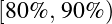
:A;
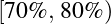
:B;
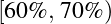
:C;
:D;
:F
Below, each lesson corresponds to a one-hour class. Homework problems in bold correspond to similar WeBWorK problems, which must be submitted online. The problem numbers not in bold are for practice.
Course Coverage and tentative schedule (Chapters 1–5)
| Lesson | Section | Topic | Homework Problems
|
| 1 | 1.2 1.4 | Review: Linear and quadratic functions Review: Trigonometric functions | 13, 14, 18, 21, 25, 31, 35, 39, 41 3, 7, 13, 15, 19, 21, 47 |
| 2 | 1.5 1.6 | Review: Inverse functions Review: Exponential and log functions | 3, 4, 28, 33, 36, 37, 47, 49, 53 1, 7, 9, 22, 28, 29, 31, 33, 34, 42 |
| 3 | 2.1 2.2 | Limits and rates of change Limits: Numerical and graphical | 1, 3, 4, 17, 24, 25, 30 1, 5, 7, 17, 19, 21, 24, 28, 30, 51, 55 |
| 4 | 2.3 | Limit laws | 4, 5, 9, 16, 17, 19, 27, 29, 31 |
| 5 | 2.4 | Continuity | 1, 17, 19, 22, 25, 51, 57, 65, 71, 77 |
| 6 | 2.5 | Evaluating limits algebraically | 5, 7, 9, 17, 21, 27, 29, 39, 47, 51, 52 |
| 7 | 2.6 | Trigonometric limits | 2, 12, 17, 21, 25, 29, 33, 34, 36, 44 |
| 8 | 2.7 | Limits at infinity | 7, 8,10,14,19, 22, 30, 38 |
| 9 | 2.8 | Intermediate Value Theorem | 3, 5, 7, 9, 15 |
| 10 | 3.1 | Definition of the derivative | 6, 9, 13, 17, 18, 22, 26, 29, 53, 55, 57 |
| 11 | 3.2 | Derivative as a function | 9, 11, 17, 23, 32, 35, 35, 41, 43, 52, 53, 66, 68 |
| 12–13 | 3.3 | Product and quotient rules | 6, 8, 9, 19, 21, 29, 30, 31, 35, 41, 43, 53 |
| 14 | 3.4 | Rates of change | 6, 8, 9, 21, 23, 32, 33, 37, 41, 47, 51, 61 |
| 15 | Review |
|
|
| 16 | Exam 1 |
|
|
| 17 | Exam 1 |
|
|
| 18 | 3.5 | Higher derivatives | 5, 9, 11, 19, 21, 27, 39, 41, 42 |
| 19 | 3.6 | Derivatives of trig functions | 1, 7, 10, 17, 18, 23, 29, 43 |
| 20–21 | 3.7 | The chain rule | 5, 7, 13, 15, 29, 37, 38, 45, 49, 57, 93 |
| 22 | 3.8 | Implicit differentiation | 3, 5, 13, 19, 25, 30, 35, 43, 56, 87 |
| 23 | 3.9 | Derivatives of exponentials and logs | 1, 3, 7, 9, 17, 45, 47 |
| 24–25 | 3.10 | Related rates | 3, 5, 9, 13, 15, 16, 19, 21, 25, 29 |
| 26 | 4.1 | Linear approximation | 5, 7, 9, 13, 15, 17, 19, 23, 28, 29, 33, 45, 48 |
| 27–28 | 4.2 | Extreme values | 4, 9, 17, 21, 41, 49, 57, 67 |
| 29–30 | 4.3 | The Mean Value Theorem and monotonicity | 1, 15, 16, 17, 25, 26, 34, 38, 39, 46, 55, 59 |
| 31–32 | 4.4 | The second derivative and concavity | 1, 2, 9, 11, 15, 20, 22, 29, 43, 54, 57, 65 |
| 33 | 4.5 | L’Hôpital’s Rule | 8, 12, 16, 19, 22, 23, 31, 40, 43, 46, 67 |
| 34–35 | 4.6 | Sketching graphs | 1, 13, 19, 28, 31, 34, 38, 45, 54, 57 |
| 36–37 | 4.7 | Applied optimization | 1, 8, 13, 15, 16, 24, 28, 29, 32, 35, 45, 59 |
| 38 | Review |
|
|
| 39–40 | Exam 2 |
|
|
| 41 | 5.1 | Approximating and computing area | 3, 19, 21, 26, 47, 79 |
| 42 | 5.2 | The definite integral | 8, 9, 13, 18, 22, 25, 31, 43, 47, 58 |
| 43–44 | 5.3 | The indefinite integral | 3, 5, 7, 14, 16, 17, 19, 22, 24, 27, 32, 38, 47, 51, 66 |
| 46 | 5.4 | The fundamental Theorem of Calculus I | 10, 11, 13, 25, 33, 35, 37, 40, 45, 47, 53, 55, 62 |
| 47 | 5.5 | The fundamental Theorem of Calculus II | 14, 15, 19, 21, 22, 25, 27, 28, 33, 34, 37, 39, 41, 43, 47 |
| 48–49 | 5.7 | The substitution method | 29, 30, 35, 38, 48, 53, 63, 67, 73, 87, 97 |
| 50–51 | 5.8 | Further integral formulas | 3, 9, 17, 20, 47, 48, 50, 57 |
| 52 | Review |
| |
| 53–54 | Exam 3 | ||
| 55–56 | Final review |
|
|
There will be a comprehensive final exam at the end of the semester. The final exam cannot be rescheduled. Missing the final exam will result in an F or WU or INC grade for this class unless otherwise discussed. An INC (incomplete) grade may be given by the discretion of your professor if all your other course work has a passing grade. In the case of an INC grade, you need to clear it as soon as possible by making the necessary arrangements with your professor.
Attendance will be recorded during each class session. Six or more unauthorized absences will result in a WU grade. In general, the only acceptable excuses for missing class (including exams) are serious illness, family/personal emergency, or religious observance. Appropriate documentation must be presented to authorize an absence.
Students are expected to uphold the CUNY Policy on Academic Integrity. Cheating on exams will result in failures, at minimum. For details on the school’s policy on this, see the Academic Integrity section of the Student Handbook.
Qualified students with disabilities will be provided reasonable academic accommodations if determined eligible by the Center for Student Accessibility. Prior to granting disability accommodations in this course, the instructor must receive written verification of student’s eligibility from the Center for Student Accessibility. It is the student’s responsibility to initiate contact with the Center for Student Accessibility staff and to follow the established procedures for having the accommodation notice sent to the instructor.